Heart Diseases
31 March 2026
Introduction
"Heart Diseases" refers to a broad spectrum of diseases related to the heart. Among different types of heart diseases, coronary heart disease constitutes a major portion of the mortality. The disease occurs when cholesterol layers deposit on the inner wall of coronary arteries and narrow the lumens of the arteries. The process reduces blood supply to cardiac muscle and causes exertional chest pain known as angina.
Situation in Hong Kong
Classification of diseases and causes of death is based on the International Statistical Classification of Diseases and Related Health Problems (ICD) 10th Revision from 2001 onwards. Figures from 2001 onwards may not be comparable with figures for previous years which were compiled based on the ICD 9th Revision.
Heart diseases correspond to codes 390-429 in ICD-9 and I00-I09, I11, I13, I20-I51 in ICD-10. Coronary heart disease corresponds to codes 410-414 in ICD-9 and I20-I25 in ICD-10.
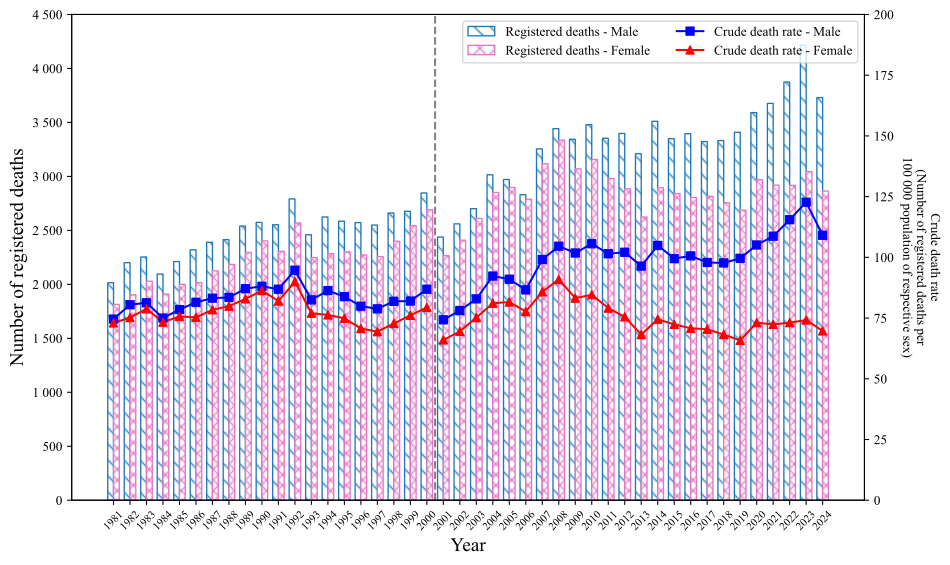
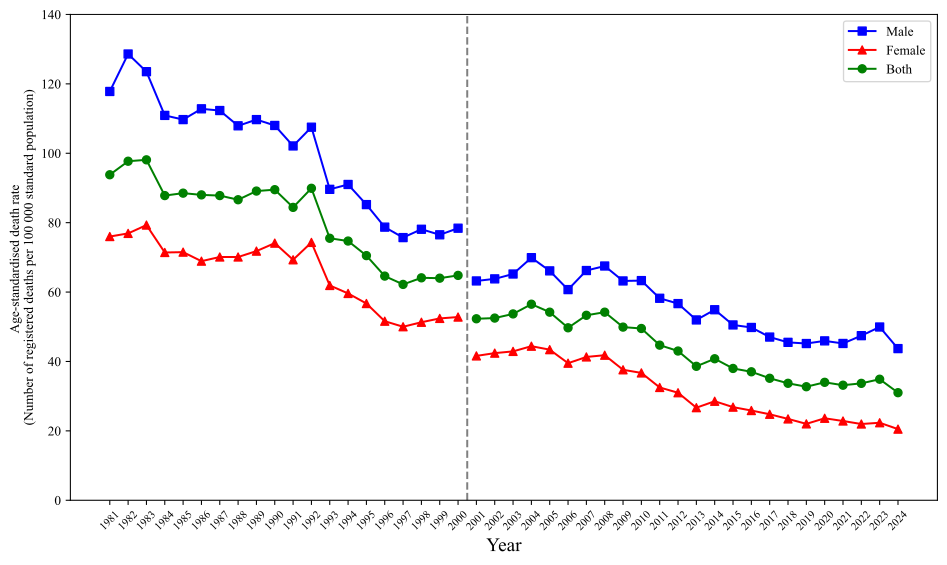
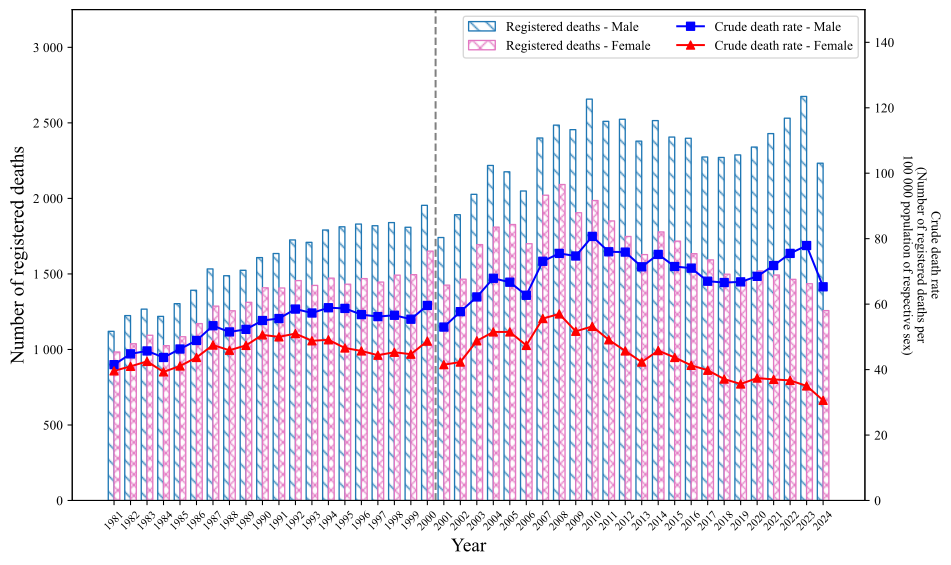
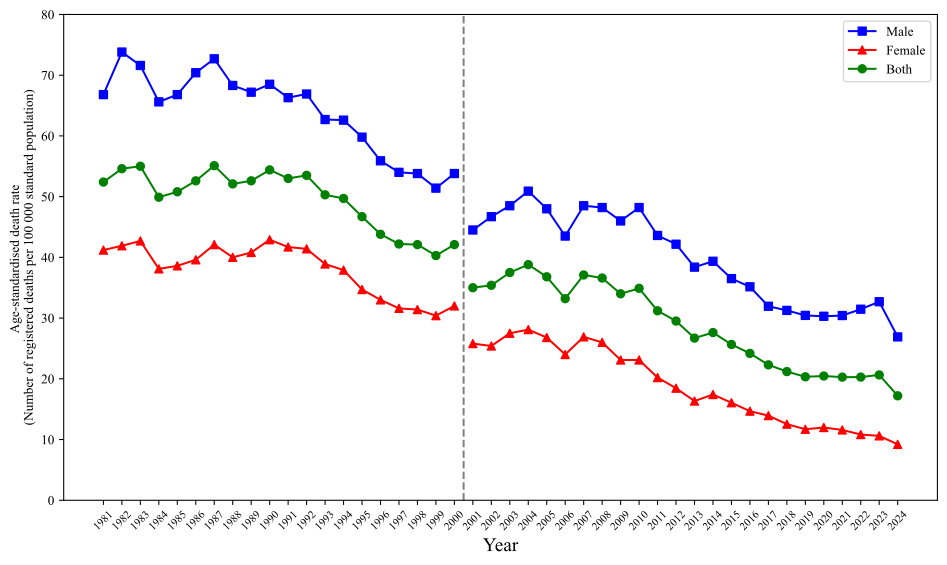
In 2024, heart diseases claimed about 88 900 inpatient discharges and inpatient deaths in all hospitals†, and 6 594 registered deaths‡. They were the third commonest cause of deaths in Hong Kong, accounting for 12.6% of all registered deaths. The crude death rates of heart diseases were 109.1 for males and 69.7 for females per 100 000 population of respective sex. Coronary heart disease was the dominating component, making up 52.9% of heart disease deaths. The crude death rates due to coronary heart disease were 65.3 for males and 30.6 for females per 100 000 population of respective sex. The age-standardised death rates* of heart diseases were 43.7 for males and 20.5 for females per 100 000 standard population. The age-standardised death rates due to coronary heart disease were 26.9 for males and 9.2 for females per 100 000 standard population.
Population Health Survey (PHS) 2020-22 revealed that 1.6% of persons aged 15 or above reported doctor-diagnosed coronary heart disease, with a higher prevalence in males (2.1%) than in females (1.2%). The prevalence increased with age, from 0.1% for people aged 15-24 to 7.7% for people aged 85 or above.
Number of registered deaths and crude death rate of heart diseases by sex, 1981 to 2024 (View)
Age-standardised death rate of heart diseases by sex, 1981 to 2024
Number of registered deaths and crude death rate of coronary heart disease by sex, 1981 to 2024 (View)
Age-standardised death rate of coronary heart disease by sex, 1981 to 2024
| Notes : | Classification of diseases and causes of death is based on the International Statistical Classification of Diseases and Related Health Problems (ICD) 10th Revision from 2001 onwards. Figures from 2001 onwards may not be comparable with figures for previous years which were compiled based on the ICD 9th Revision. |
|
| † | Include both inpatient discharges and inpatient deaths in all hospitals with heart diseases as the principal diagnosis in that episode of hospitalisation. |
|
| ‡ | Include registered deaths with heart diseases as the underlying cause of death. |
|
| * | Age-standardised death rates are compiled based on the world standard population specified in GPE Discussion Paper Series: No.31, EIP/GPE/EBD, World Health Organization, 2001. |
|
| Sources : | Census and Statistics Department Department of Health |
|
Symptoms
People with coronary heart disease may experience central crushing chest pain, precipitated by exertion and relieved by rest. The pain may radiate to the arm, shoulder, neck and jaw. It is of greater severity and longer duration in a heart attack. Other symptoms include palpitation, dizziness, sweating, nausea and weakness. It may be associated with breathlessness and bilateral leg swelling when the patient is in heart failure.
Risk factors
There are many risk factors for coronary heart disease and many of them are preventable or treatable. They include hypertension, hyperlipidemia, smoking, diabetes mellitus, obesity, lack of physical activity and chronic stress. Family history of the disease also increases the risk.
Prevention
To prevent coronary heart disease, people should never smoke, follow a balanced diet and avoid food with high cholesterol and fat (especially saturated fat and trans fat). Regular physical activity, maintaining an optimum body weight and waist circumference, and reducing stress are also beneficial. Of note, evidence on possible heart benefit of alcohol consumption remains controversial. For non-drinkers, they should not start drinking, assuming that alcohol consumption can improve their heart health. Drinkers are urged to refrain from alcohol consumption. People with any underlying illnesses such as hypertension or diabetes should receive appropriate medical follow-up.
